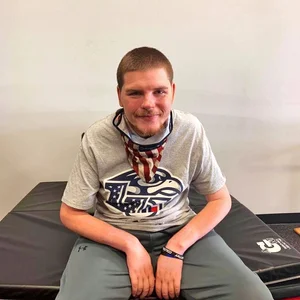
Texas v. Kennedy: Why Disability Rights and Community Belonging Matter
For many Americans, Texas v. Kennedy might sound like just another legal case with a confusing name. But for people like me with disabilities, their families, caregivers, and advocates, it’s about a bigger question: Will disabled folks still have real protection from discrimination and the right to live, get care, and be part of their communities instead of being pushed into institutions?
This issue isn’t just some abstract legal debate. It’s about whether able-bodied people see others like me as fully human, valuable, and deserving of a life in the community.
"So God created man in His own image, in the image of God He created him; male and female He created them." — Genesis 1:27 (NASB)
As a C4 quadriplegic, I know that disability changes everyday things like personal care, accessible transportation, medical equipment, communication, and whether others look beyond the diagnosis. But disability never takes away a person’s worth.
What Is Texas v. Kennedy?
Texas v. Kennedy, which was first named Texas v. Becerra, started in 2024 when Texas and some other states sued the federal government over new rules for Section 504 of the Rehabilitation Act.
Section 504 is a key part of disability rights law, banning discrimination against people with disabilities in programs that get federal money. It covers:
Healthcare and medical choices
Access to medical tools
Websites, kiosks, and online services
Communication support
Community living services
By 2025, the states dropped the claim that Section 504 itself was unconstitutional. But the case is still going, now focused on rules that protect disabled people’s right to live in communities, not institutions.
The Fight for Community Living
At the center is the integration ruling, based on the Supreme Court’s Olmstead v. L.C. decision.
This idea is straightforward: Disabled people should be able to live in their own homes and communities with the support they need, instead of being separated in institutions.
Having a disability shouldn’t automatically mean being cut off from the community. Neighborhoods, churches, workplaces, and friendships should be part of everyday life.
"But now God has placed the members, each one of them, in the body, just as He desired." — 1 Corinthians 12:18 (NASB)
Disability Isn’t a Burden to Hide
Society often treats disability as a problem to manage instead of a life to welcome. This idea shows up as:
Buildings or transportation that aren’t accessible
Poor medical treatment
Talking over or underestimating people
Assuming people who need help can’t contribute
But the truth is that people with disabilities are students, workers, parents, leaders, and friends. We have gifts, purposes, and contributions.
"And He has said to me, ‘My grace is sufficient for you, for power is perfected in weakness.‘" — 2 Corinthians 12:9 (NASB)
Weakness isn’t the end of the story; instead, God’s strength shows up in it.
What the Church Needs to Remember
As the Texas v. Kennedy case develops, Christians should think about how we see disability. The Church shouldn’t wait for the government to make us include everyone.
Questions for the Church:
Can someone in a wheelchair get into our church and move around comfortably?
Are our services accessible to different needs?
Do we make space for people who communicate or learn differently?
Do we see disabled believers as valued contributors, not just people who need help?
Are we listening to disabled people and their families?
Accessibility isn’t about political correctness. It’s about showing love in action.
Seeing the Image of God
The most important truth is theological: God created everyone in His image. That includes:
People in wheelchairs
People with intellectual disabilities
People with autism
People with chronic illnesses
People who need caregivers
The body of Christ is stronger when we stop measuring worth based on independence or convenience. We all need grace, community, and God.
Texas v. Kennedy isn’t just about rules, but it's about dignity and belonging.
"For just as the body is one and yet has many members… so also is Christ." — 1 Corinthians 12:12 (NASB)
People with disabilities shouldn't be on the sidelines. They belong in the body, in the community, and in the life of the Church.